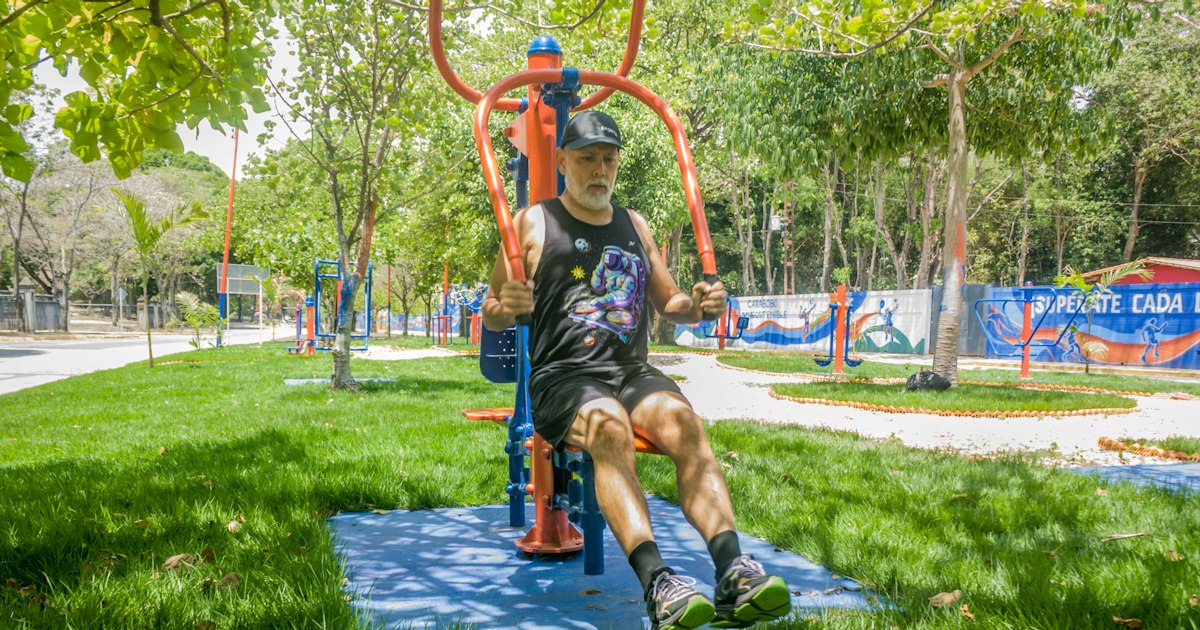

«Quit sport and your muscles will turn to fat» is one of the most enduring myths of fitness. Many have seen former athletes who gained weight after ending their careers and conclude a «transformation» happened. The editorial team explains why this is physiologically impossible, what actually happens to the body after stopping training and how to avoid it.
Why muscle cannot become fat
Muscle and fat tissue are different types of tissue with different cells, origin and functions. Skeletal muscles consist of multinucleated muscle fibers filled with the contractile proteins actin and myosin. Fat tissue consists of adipocytes — cells that store energy in the form of triglycerides.
One mature cell cannot turn into another mature cell of a different tissue, just as bone does not become skin. A muscle fiber can decrease in volume (atrophy) or increase (hypertrophy), but not «remake» itself into a fat cell.
Chemically, muscles are mostly water and protein, fat is triglycerides. Proteins can break down into amino acids, part of which are used to obtain energy or glucose, but the conversion of protein into fat in the human body is an extremely inefficient pathway and has no practical significance with ordinary nutrition.
So the phrase «muscles turned into fat» describes not a process but the visible result of two independent changes: a decrease in muscle mass and a simultaneous increase in fat. Together they give the impression of a «transformation», especially if body weight has barely changed.
| Characteristic | Muscle tissue | Fat tissue |
|---|---|---|
| Main cells | Muscle fibers (myocytes) | Adipocytes |
| Main component | Water, contractile proteins | Triglycerides |
| Function | Movement, glucose metabolism, amino acid reserve | Energy store, endocrine function |
| Reaction to detraining | Atrophy | Can increase with excess calories |
What happens after stopping training
After giving up training the body gradually reduces its «expenditure» on what is no longer used. Endurance decreases first: VO2max and the efficiency of aerobic metabolism begin to fall already after 2–4 weeks. Reviews by Mujika and Padilla describe these changes as detraining — a partial or complete loss of training adaptations.
Strength and muscle mass are preserved longer. According to studies, in trained people during the first few weeks of a break strength barely changes, and noticeable atrophy develops gradually. Part of the initial «deflation» of the muscles in the first days is connected with a smaller store of glycogen and water rather than with loss of protein.
The speed of losses depends on age, fitness, nutrition and whether the person remains generally active. In elderly people atrophy goes faster, and complete immobilization (a cast, bed rest) sharply accelerates the loss of muscle — even in the young a noticeable share of the muscle mass of the legs is lost in one to two weeks.
Important: even after a long break the level of muscle mass usually remains higher than in a person who has never trained. Structural changes, in particular an increase in the number of nuclei in the fibers, can persist for a long time.

Where «going to fat» comes from
The main cause of fat gain after stopping training is energy balance. A person is used to eating a lot in order to support training and muscle growth, and after giving up sport the eating habits often remain the same. Energy expenditure falls, intake does not, and the excess is deposited in fat tissue.
Expenditure decreases for several reasons: there is no energy spent on the training itself, spontaneous motor activity decreases, and the loss of part of the muscle mass somewhat reduces expenditure at rest. The contribution of muscles to basal metabolism is often overestimated, but in sum with the absence of training the difference becomes noticeable.
In professional athletes the situation is complicated by a change of regimen, stress after ending a career, sometimes injuries that limit movement. That is exactly why former athletes are the most well-known «proof» of the myth, although physiologically they demonstrate an ordinary excess of calories against a background of reduced activity.
A separate case is people who gained mass using anabolic steroids. After discontinuing the drugs and against a background of suppression of their own testosterone, the loss of muscle and gain of fat can be faster. But here too the fat comes from an excess of energy, not from a «remade» muscle.
Muscle memory: how quickly form returns
Good news: restoring lost form is significantly easier than gaining it for the first time. The phenomenon of «muscle memory» has several explanations. The first is neuromuscular: the skill of performing exercises and coordination are preserved for a long time, so strength returns quickly.
The second is cellular. In experiments on animals (Bruusgaard et al., 2010) it was shown that the nuclei that muscle fibers receive from satellite cells during hypertrophy are preserved even after atrophy. These «extra» nuclei can accelerate repeated growth. In humans the data are less unambiguous, but the concept is being actively studied.
The third is epigenetic. A study by Seaborne and co-authors (2018) on humans showed that after a period of strength training, a break and repeated training, the muscles reacted more strongly to the second cycle, and certain methylation changes connected with the previous training were preserved in the DNA.
Practically this means: even after several months of a break it is not worth considering that all efforts were lost. A return to training with a gradual increase of the load usually quickly restores a significant part of the previous form.
How to reduce losses during a break
If the break is forced or planned, a few simple steps will help preserve the result. Minimal training is better than none: studies show that to maintain strength and mass a significantly smaller volume is enough than for their development — sometimes one or two short workouts a week with sufficient intensity.
- adjust the calorie content according to the new activity in order to avoid an excess;
- keep a high protein intake — roughly 1.2–1.6 g/kg per day to preserve muscle;
- maintain daily movement — walking, household activity, walks;
- in case of injury train the uninjured parts of the body, if the doctor does not object;
- plan the return with a gradual increase in volume.
It is useful to track not only weight but also waist circumference and photographs: this way it is easier to notice a tendency toward fat gain in time, before the changes become significant.
For older people maintaining activity is especially important, since sarcopenia — the age-related loss of muscle mass — accelerates with inactivity. Even a short break due to illness can have noticeable consequences, so restoring activity should be started as early as possible with a doctor's permission.
Editorial conclusions
Muscles cannot turn into fat: these are different tissues. After stopping training two separate processes occur — atrophy of muscles and, with an excess of calories, accumulation of fat.
The main culprit of «going to fat» is nutrition that was not adjusted to the new activity. Control of calorie content, protein and minimal motor activity allow the consequences of a break to be significantly softened.
Thanks to muscle memory the return of form usually happens faster than its first acquisition.
We also recommend: «Is It Harmful to Train Every Day», «Should You Drink Protein Without Training» and «Obesity and Estrogen in Men».
References
- Mujika I, Padilla S. Detraining: loss of training-induced physiological and performance adaptations. Part I: short term insufficient training stimulus. Sports Med. 2000;30(2):79–87.
- Mujika I, Padilla S. Detraining: loss of training-induced physiological and performance adaptations. Part II: long term insufficient training stimulus. Sports Med. 2000;30(3):145–154.
- Bruusgaard JC, Johansen IB, Egner IM, et al. Myonuclei acquired by overload exercise precede hypertrophy and are not lost on detraining. Proc Natl Acad Sci USA. 2010;107(34):15111–15116.
- Seaborne RA, Strauss J, Cocks M, et al. Human skeletal muscle possesses an epigenetic memory of hypertrophy. Sci Rep. 2018;8(1):1898.
- Bickel CS, Cross JM, Bamman MM. Exercise dosing to retain resistance training adaptations in young and older adults. Med Sci Sports Exerc. 2011;43(7):1177–1187.
- Jäger R, Kerksick CM, Campbell BI, et al. International Society of Sports Nutrition position stand: protein and exercise. J Int Soc Sports Nutr. 2017;14:20.
Andriy Melnyk
A strength-sports coach and author of programs for beginner and intermediate levels. Writes about training planning.